
Look as Energised as You Feel with Our
Scarless Eye Bag Removal
Enjoy a brighter appearance without scars and minimal downtime, so you can face the world with confidence
What Are The Causes Of Eye Bags?
Tired of looking exhausted, no matter how much sleep you get? Eye bags can add years to your appearance and make you look less vibrant.
Here’s what’s behind those stubborn under-eye bags:
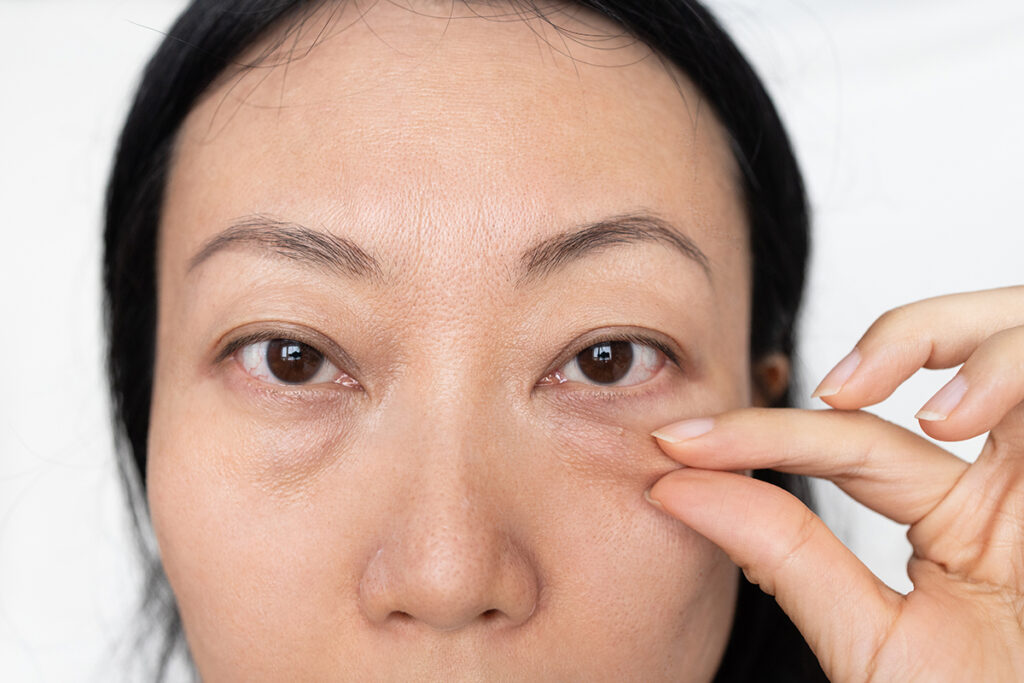
Fluid retention
Can cause puffiness under the eyes, especially in the mornings.

Ageing
As we age, the tissue supporting the under-eye area weakens, allowing fat to shift and create bags.
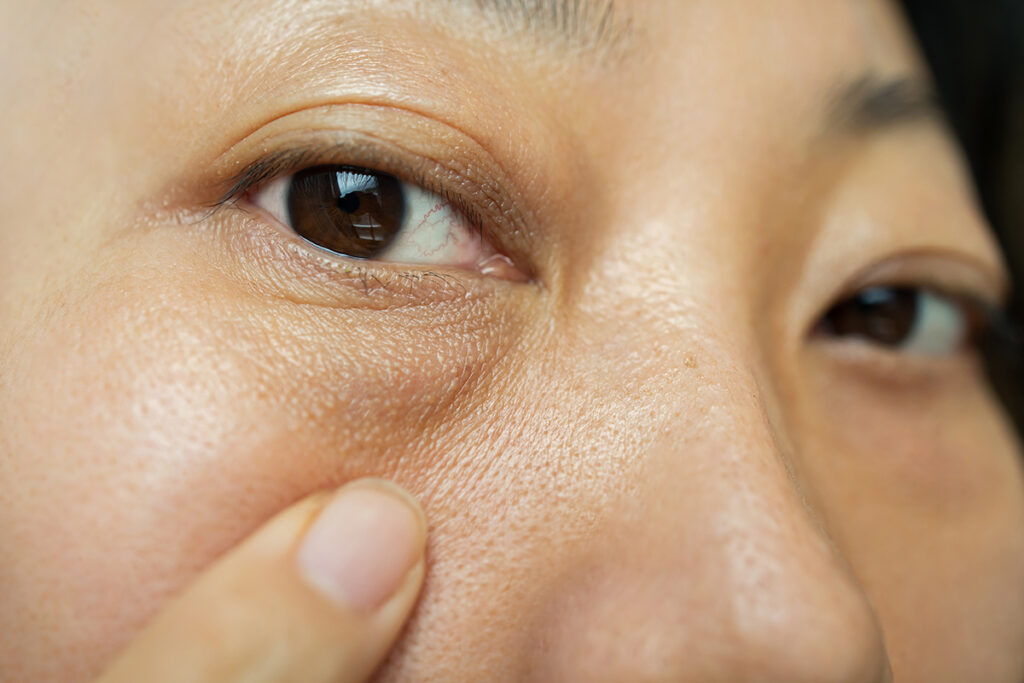
Thin skin
The thinning skin around the eyes makes underlying structures more visible, adding to the appearance of puffiness.
If you’re constantly covering them with makeup or feeling self-conscious around others, you’re not alone. Eye bags can impact self-confidence, but at Argent Plastic Surgery, solutions are within reach.
Ready To Say Goodbye To Eye Bags?
Discover Treatments To Give You A Refreshed Look!
For many, eye bags are challenging to tackle with topical solutions and lifestyle changes alone. Watch the short video below where Dr. Lee Hanjing introduces the surgical treatments we have for eye bag removal and how they can help you achieve a revitalised look.
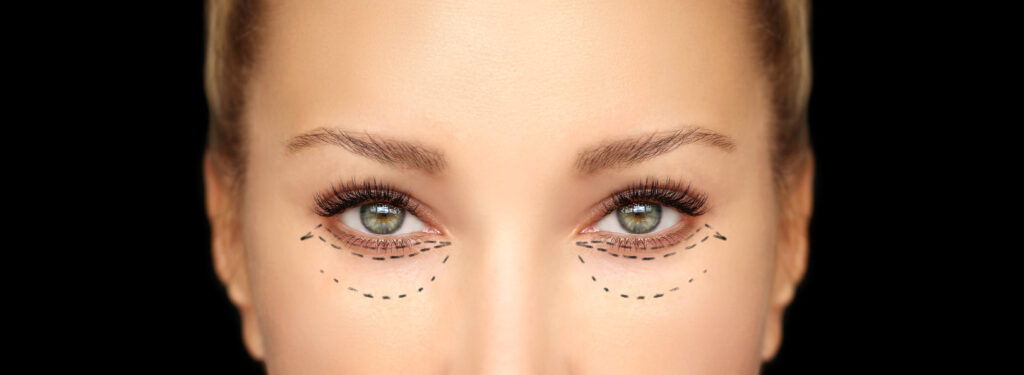
Lower eyelid blepharoplasty
Ideal for cases where eye bags are caused by herniated fat or deep tear troughs, lower eyelid blepharoplasty reshapes the lower eyelid area.
This surgery smooths the contour between the eyelid and cheek, often combined with fat grafting for a more balanced look.
Two approaches are available:
-
Transconjunctival Approach: Internal and scarless method for removal of eye bag, leaving no external markings. -
Subciliary Approach: External, just under the eyelashes, allowing for additional adjustments if needed.
Expect bruising and swelling for a week with noticeable improvements as time progresses. Recovery may take longer than other treatments, with gradual healing over the next 3 to 6 months.
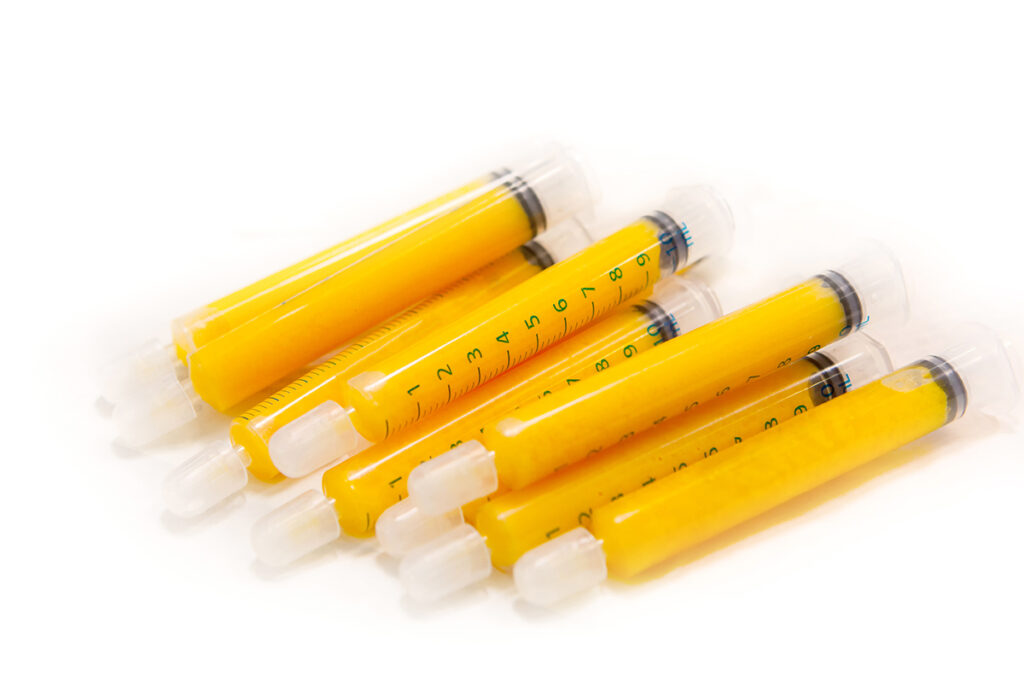
Fat Transfer
A natural alternative to fillers, fat transfer uses fat harvested from areas like the lower abdomen or thighs.
These fat grafts contain stem cells that support skin rejuvenation, with approximately 70% of the injected fat typically retained in the treatment area. Fat transfer can also be used for broader facial contouring.
https://youtu.be/cYpUKr0smVo
Want to explore options for a more youthful look?
Why Choose Argent Plastic Surgery?

Over 10 Years Of Experience
We have over a decade of experience in plastic and cosmetic surgery.

Patient-First Approach
We prioritise your needs, ensuring a comfortable experience from consultation to recovery.

Personalised Treatment Plans
Each treatment is tailored to your goals and concerns.

Natural-Looking Results
Our focus is on enhancing your appearance with authentic-looking results.

Meet
Dr Lee Hanjing
MBBS (UK), MRCS (Edin), MMed (Surg), FAMS (Plastic Surgery)
Member of Singapore Association of Plastic Surgeon
Fellow of the Academy of Medicine Singapore
Member of ISAGSS
Dr. Lee Hanjing is a Consultant Plastic Surgeon with extensive training in both cosmetic and reconstructive surgery. After earning her medical degree from the University of London, she completed her postgraduate training at the National University Hospital (NUH) in Singapore and further specialised in cosmetic surgery through a fellowship at East Sydney Private Hospital, focusing on body contouring and breast procedures.
Dr. Lee’s areas of expertise include eye bag removal, blepharoplasty, rhinoplasty, breast augmentation, liposuction, and reconstructive surgery for facial trauma and paediatric cases. In addition to her clinical work, Dr. Lee holds an appointment as an Assistant Professor at the Yong Loo Lin School of Medicine. She is also a Fellow of the Academy of Medicine Singapore in Plastic Surgery and a member of the Singapore Association of Plastic Surgeons.
What To Expect When You Visit Us

Clinic Consultation
-
For local patients: In your initial consultation, you’ll meet with Dr. Lee in person to discuss your concerns and preferences. Dr. Lee will outline available options, provide relevant advice based on your situation, and address any questions you may have to help you make an informed decision. -
For patients located overseas: Meet with Dr. Lee via tele-consultation to discuss your concerns and treatment options. A prepayment is required to book this session. In-person consultations are also available if you come to Singapore, and we can arrange airport transfers and assist with nearby hotel bookings.

Pre-surgical preparation
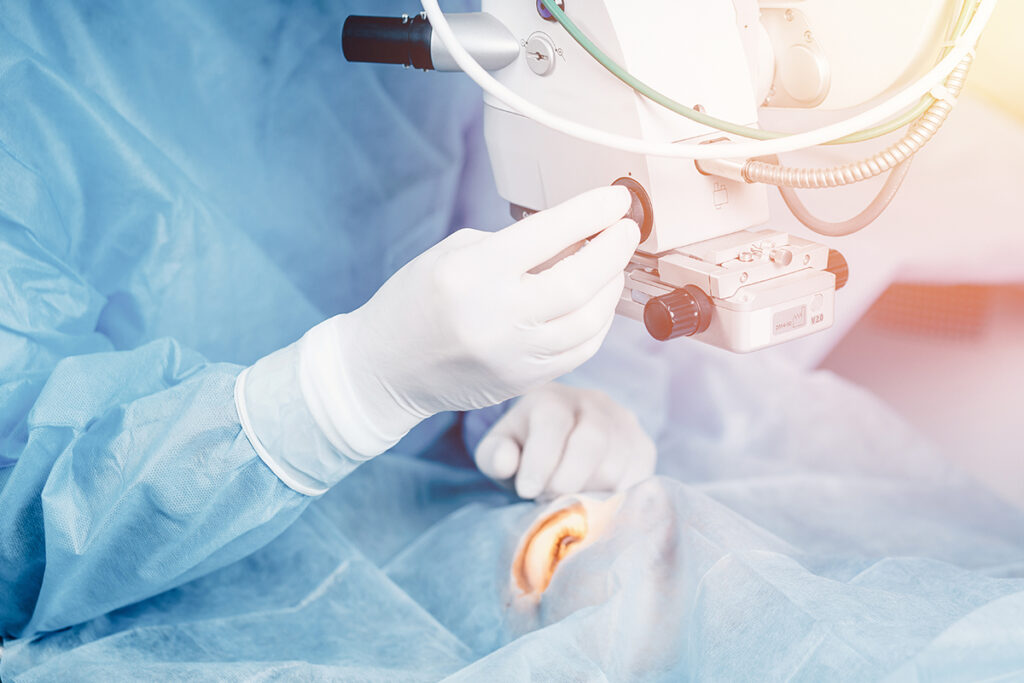

Clinic Consultation
-
For local patients: In your initial consultation, you’ll meet with Dr. Lee in person to discuss your concerns and preferences. Dr. Lee will outline available options, provide relevant advice based on your situation, and address any questions you may have to help you make an informed decision. -
For patients located overseas: Meet with Dr. Lee via tele-consultation to discuss your concerns and treatment options. A prepayment is required to book this session. In-person consultations are also available if you come to Singapore, and we can arrange airport transfers and assist with nearby hotel bookings.
Pre-surgical preparation

Clinic Consultation
In your initial consultation, you’ll meet with Dr. Lee in person to discuss your concerns and preferences. Dr. Lee will outline available options, provide relevant advice based on your situation, and address any questions you may have to help you make an informed decision.

Pre-surgical preparation
During this stage, we’ll discuss the following points to help you get ready for your procedure:
-
Medications -
Fasting time -
Insurance Coverage -
Anaesthesia -
Speciality consultations if there are medical conditions that need to be optimised

Surgery
Depending on your chosen procedure, this could be a day surgery or may involve a short hospital stay. Dr. Lee and the medical team will inform you of what to expect on the day, and every effort will be made to ensure your comfort.

Post-surgery
After your surgery, follow-up visits may be scheduled based on your specific treatment plan. Our team will provide detailed guidance on aftercare to support your healing and achieve the intended results.
Feel The Confidence Of A Brighter, More Energetic Look
Imagine the satisfaction of seeing a refreshed, youthful appearance every day in the mirror—without eye bags holding you back!
Frequently Asked Questions
Is the eyebags removal surgery scarless?
Yes. There are two approaches to remove eyebags. One is Transconjunctival approach and the other is Subciliary approach.
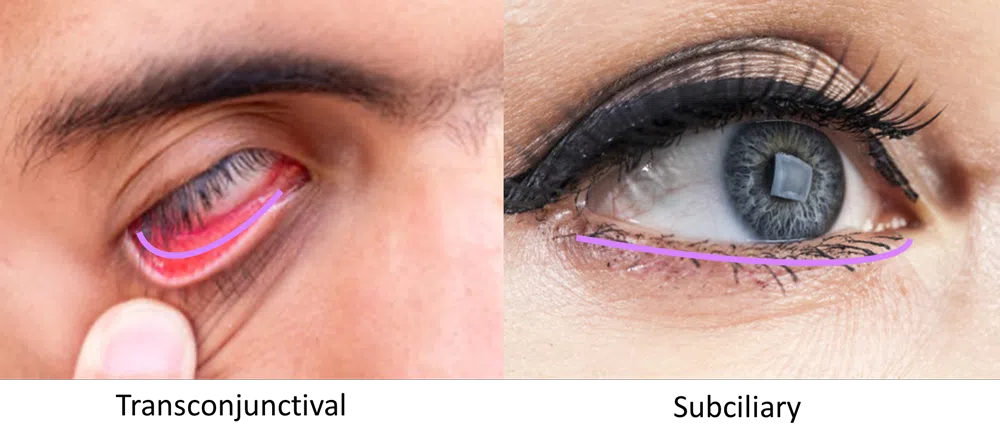
Transconjunctival approach
This is when the cut is on the conjunctival which is hidden within the eye. You will not have any external scars from this approach. This is ideal for patients who do not have excess skin over the lower eyelid skin.
Subciliary approach
This is when the cut is sited very low to your lower eyelashes, following one of the natural lines that are present over the lower eyelid skin. As a result, the scar is barely visible as it will appear like one of your natural lines under your lower eyelashes. This is ideal for older patients with excess skin and will benefit from removing this excess skin to have a smoother contour to the lid/cheek junction.
Am I a suitable candidate for eye bag surgery? Who can undergo eye bag removal surgery?
The assessment is crucial as eye bags will need to be differentiated from malar mound, malar oedema and festoons. Each of them are found in different areas of the lid/cheek junction and forms as a result of changes to various anatomical structures. The treatment of each of these conditions will vary and accurate analysis is important.
Eye bags
This develops as a result of orbital fat protruding out as result of weak orbital septum or a result of aging.
Malar mound
This is formed from a collection of soft tissue bulge which is present beneath your orbital bones and the middle of your cheek. This can occur in younger age groups as well.
Malar oedema
This is an accumulation of fluid under your eyes, making you look puffy. This can often worsen in the morning. Some medical causes can worsen it, like kidney, liver problems, thyroid disease, aesthetic injections under the eyes, allergies et cetera. Sometimes it also worsens after talking a salty meal. It is usually softer and compressible.
Festoons
Are formed from accumulation of excess skin and thinned out orbital muscle which causes a bulge or cascading appearance. This bulge is also found beneath the orbital bone. These may sometimes contain fat that have herniated out (eye bags). This often forms as a result of old age, with skin laxity, poorer skin quality as well as the forces of gravity.
How should I prepare for eyelid surgery?
Eyelid surgery is generally done under local anaesthesia. Should you prefer sedation, you would need to be fasted for about 6 hours prior to the surgery. If it is performed under local anaesthesia, you do not need to be fasted.
You should not take any medications (like anti-platelets) or herbal supplements that can cause you to bleed during surgery prior to and after surgery.
Do bring along some shades to wear after surgery.
How long does the eye bag surgery take?
This depends on your presenting condition and the extent of the surgery required. It generally takes less than 2 hours.
Are there any side effects of undergoing lower blepharoplasty?
These are some of the potential side effects after lower blepharoplasty. Most of the complications are uncommon.
- Bleeding
- Bruising
- Infection
- Chemosis – swelling of the conjunctiva
- Asymmetrical appearance
- Poor wound healing / obvious scarring / scar hypertrophy or pigmentation
- Ectropion – out-turning of the lower eyelids
- Retro-orbital bleeding with possible effect on vision
What is the recovery process or routine after eye bag surgery? What do I need to take note of or avoid?
There are several things that you can do to help reduce the swelling and bruising. Anti-swelling medication, analgesia and eyedrops will be provided.
Some simple measures that you can perform includes keeping your head elevated when sleeping at night, applying cold compress to reduce swelling, taping can also help support the swelling and reduce the tension on the wound.
Simple wound care with saline washes and application of antibiotic ointment to the wound.
Avoid taking traditional Chinese medicine or other herbal supplements which have the potential to increase your risk of bleeding.
Exercise should also be avoided for 2-4 weeks following surgery.
How long does eye bag surgery last? Are the surgery results effective for many years?
Lower blepharoplasty can generally last for about 5 to 10 years. With continued ageing, similar issues can occur again.
Yes. There are two approaches to remove eyebags. One is Transconjunctival approach and the other is Subciliary approach.
Transconjunctival approach
This is when the cut is on the conjunctival which is hidden within the eye. You will not have any external scars from this approach. This is ideal for patients who do not have excess skin over the lower eyelid skin.
Subciliary approach
This is when the cut is sited very low to your lower eyelashes, following one of the natural lines that are present over the lower eyelid skin. As a result, the scar is barely visible as it will appear like one of your natural lines under your lower eyelashes. This is ideal for older patients with excess skin and will benefit from removing this excess skin to have a smoother contour to the lid/cheek junction.
The assessment is crucial as eye bags will need to be differentiated from malar mound, malar oedema and festoons. Each of them are found in different areas of the lid/cheek junction and forms as a result of changes to various anatomical structures. The treatment of each of these conditions will vary and accurate analysis is important.
Eye bags
This develops as a result of orbital fat protruding out as result of weak orbital septum or a result of aging.
Malar mound
This is formed from a collection of soft tissue bulge which is present beneath your orbital bones and the middle of your cheek. This can occur in younger age groups as well.
Malar oedema
This is an accumulation of fluid under your eyes, making you look puffy. This can often worsen in the morning. Some medical causes can worsen it, like kidney, liver problems, thyroid disease, aesthetic injections under the eyes, allergies et cetera. Sometimes it also worsens after talking a salty meal. It is usually softer and compressible.
Festoons
Are formed from accumulation of excess skin and thinned out orbital muscle which causes a bulge or cascading appearance. This bulge is also found beneath the orbital bone. These may sometimes contain fat that have herniated out (eye bags). This often forms as a result of old age, with skin laxity, poorer skin quality as well as the forces of gravity.
Eyelid surgery is generally done under local anaesthesia. Should you prefer sedation, you would need to be fasted for about 6 hours prior to the surgery. If it is performed under local anaesthesia, you do not need to be fasted.
You should not take any medications (like anti-platelets) or herbal supplements that can cause you to bleed during surgery prior to and after surgery.
Do bring along some shades to wear after surgery.
This depends on your presenting condition and the extent of the surgery required. It generally takes less than 2 hours.
These are some of the potential side effects after lower blepharoplasty. Most of the complications are uncommon.
- Bleeding
- Bruising
- Infection
- Chemosis – swelling of the conjunctiva
- Asymmetrical appearance
- Poor wound healing / obvious scarring / scar hypertrophy or pigmentation
- Ectropion – out-turning of the lower eyelids
- Retro-orbital bleeding with possible effect on vision
There are several things that you can do to help reduce the swelling and bruising. Anti-swelling medication, analgesia and eyedrops will be provided.
Some simple measures that you can perform includes keeping your head elevated when sleeping at night, applying cold compress to reduce swelling, taping can also help support the swelling and reduce the tension on the wound.
Simple wound care with saline washes and application of antibiotic ointment to the wound.
Avoid taking traditional Chinese medicine or other herbal supplements which have the potential to increase your risk of bleeding.
Exercise should also be avoided for 2-4 weeks following surgery.
Lower blepharoplasty can generally last for about 5 to 10 years. With continued ageing, similar issues can occur again.
Let’s Get In Touch!
If you have any questions, feel free to reach out—we’re here to help and happy to answer anything you need.